
The Classic Muscle Cars That Filled the Staging Lanes
Before drag racing became a sport of tube chassis and parachutes, it was a sport of showroom cars with the hubcaps pulled off. The classic muscle car era — roughly 1964 to 1971 — filled the staging lanes of every new strip in America, and the cars from those years still define what most people picture when they hear the word. This page is the tour of the ones that mattered, why they mattered, and what they are like to race today.
It is not a price guide and not a restoration manual. It is the answer to the question every beginner asks at the fence: which of the old cars actually earned their reputation on the strip, and which ones borrowed it from the advertising.
The formula: big engine, midsize body, small price
The muscle car was a parts-bin idea. Take the corporation's biggest V8, drop it in the midsize body, price it where a young buyer could reach, and let the stoplights do the marketing. The 1964 Pontiac GTO wrote the template and the industry spent the rest of the decade copying it. What made the formula perfect for drag racing was the weight: these were not light cars, but they were simple, narrow, rear-driven and geared for one quarter-mile argument at a time. The strip turned brochure claims into slips, and the slips sold next year's models.
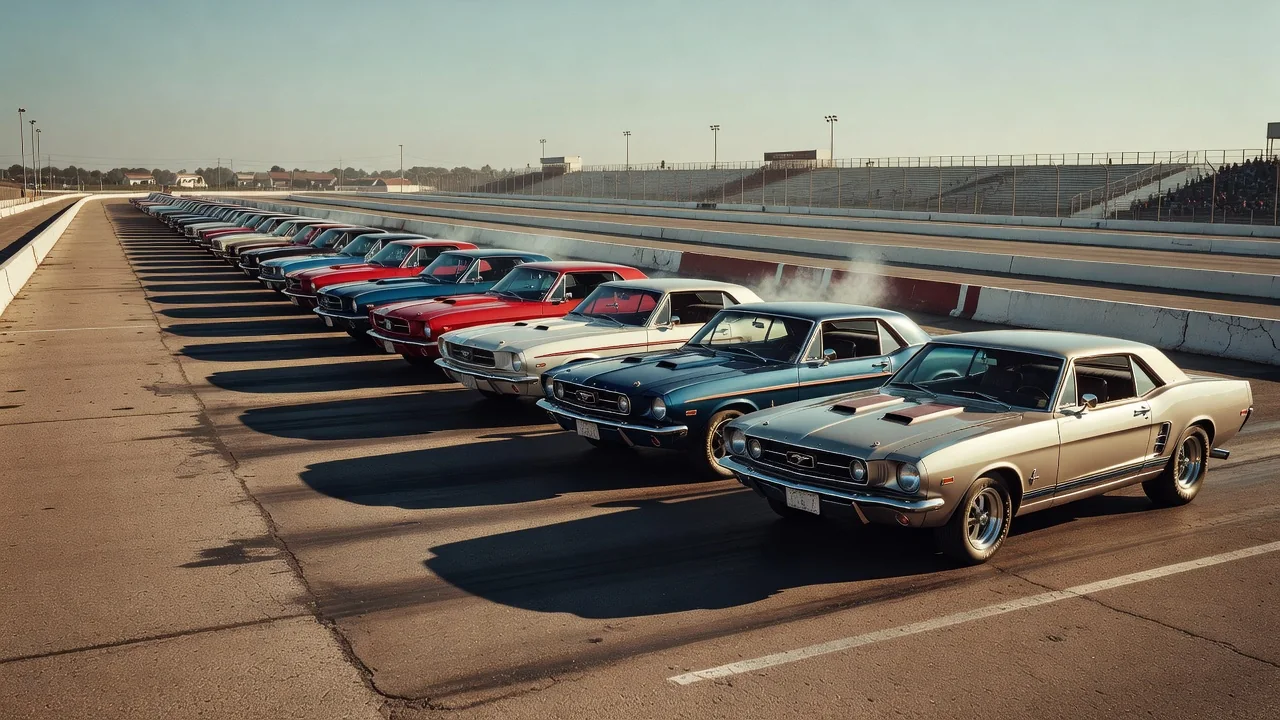
The cars that earned it on Sunday
A few names did the heavy lifting. The 1968 Plymouth Road Runner took the budget crown: a 383, a bench seat, a cartoon bird and a price that undercut everything with its performance. Ford answered the street wars with the 428 Cobra Jet Mustang in 1968, an engine built explicitly because the drag strips were embarrassing the old small-blocks. Chevrolet's 1970 Chevelle SS 454, especially in LS6 trim with a factory rating of 450 horsepower, became the era's big-stick answer. And the Chrysler Hemi cars sat above all of it, expensive, temperamental and genuinely fearsome when somebody took the time to tune one.
The options sheet that decided races
What separated the legends from the brochure cars was rarely the engine alone. Gear ratios turned the same motor into two different animals, and the racers ordered the deep rear gears while the commuters got the highway set. Close-ratio four-speeds, heavy-duty cooling, headers uncorked at the strip and the era's crude traction aids all moved the slip more than another badge did. This is why two identical-looking muscle cars could be a second apart: one was ordered by a racer, the other by an uncle.
Why the era ended almost on schedule
The muscle car died of paperwork. Insurance surcharges made the hot versions unaffordable to the young buyers they were built for, emissions rules strangled compression ratios, and the 1973 fuel crisis finished the argument. By the mid-seventies the names survived on cars that would lose a race to the models they replaced. The era's real legacy is structural: it taught Detroit that speed sells, taught racers that showroom cars belong on strips, and left behind a generation of machinery simple enough that a driveway mechanic still keeps it running.
What they are like to race now
A classic muscle car at a modern test-and-tune is a wonderful, humbling evening. The cars are heavy, the brakes are period, the suspensions were drawn before radial tires existed, and the slip will be honest about all of it. They are also the most fun per dollar in the staging lanes: the sound, the feel, and a crowd that walks over between rounds. The red flags are the usual ones. Rust is a structural issue, not a cosmetic one. Numbers-matching matters to collectors, not to the track. And a car restored for shows is a terrible thing to learn drag racing in, because the first lesson of the strip is that the car works for you now.
- The GTO wrote the template in 1964; everyone else spent a decade answering it.
- The Road Runner proved the budget version could carry the reputation.
- The Cobra Jet existed because drag strips were hurting Ford's feelings.
- Factory horsepower ratings of the era were marketing-adjacent; slips told the truth.
- Race the driver-quality car, insure the show car, never confuse the two.
| Car | The claim | The reputation at the strip |
|---|---|---|
| 1964 Pontiac GTO | The first muscle car | The template everyone copied |
| 1968 Plymouth Road Runner | Budget speed | The people's quarter-mile car |
| 1968 Mustang 428 Cobra Jet | Ford's answer | Built by embarrassment, loved ever since |
| 1970 Chevelle SS 454 LS6 | 450 factory horsepower | The era's peak number |
| Hemi Mopars | The elephant motor | Fearsome when tuned, rare for a reason |
The muscle car era lasted about seven years and set the terms for the next sixty. Every street class at your local strip is its descendant, and half the cars in this site's featured section are its grandchildren. The old cars still show up on test nights, still pull a crowd, and still remind everyone what the sport looked like before the computers took over.