
The organised side of speed: NMCA events, timing slip science and how to run your first test-and-tune night.
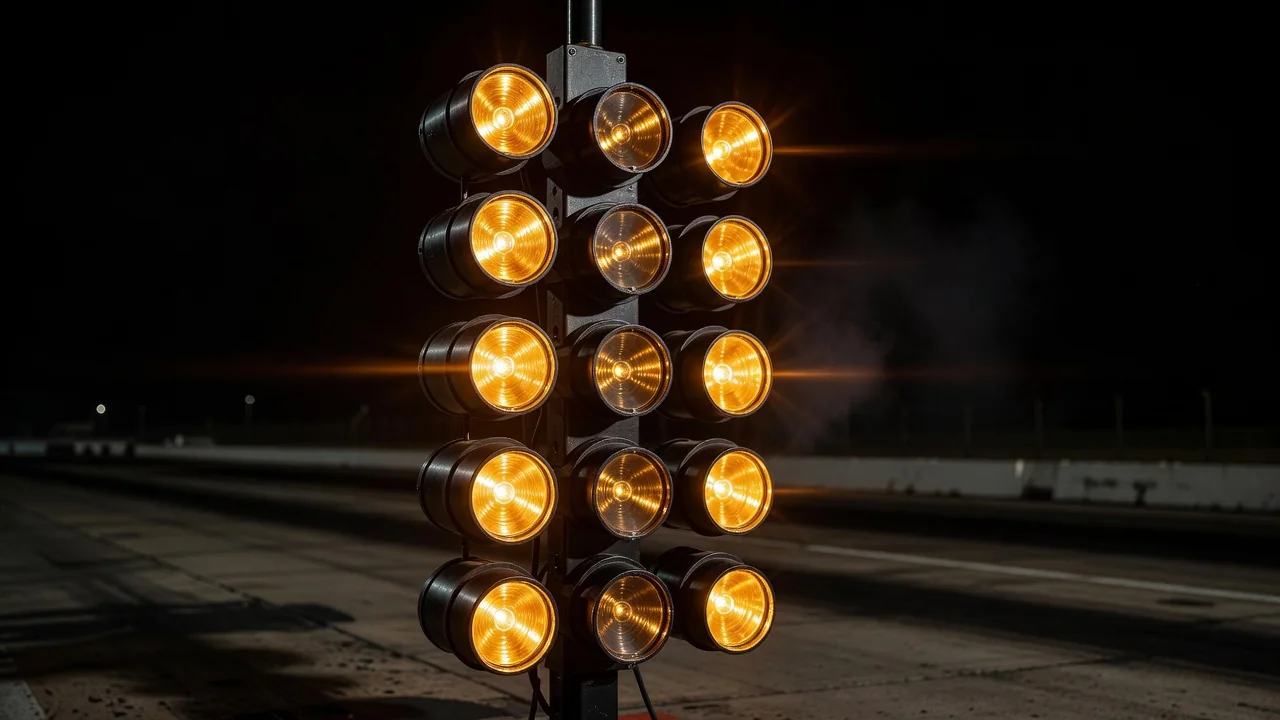
The tree is a clock, not a dare. Bring back the slip and read the reaction.
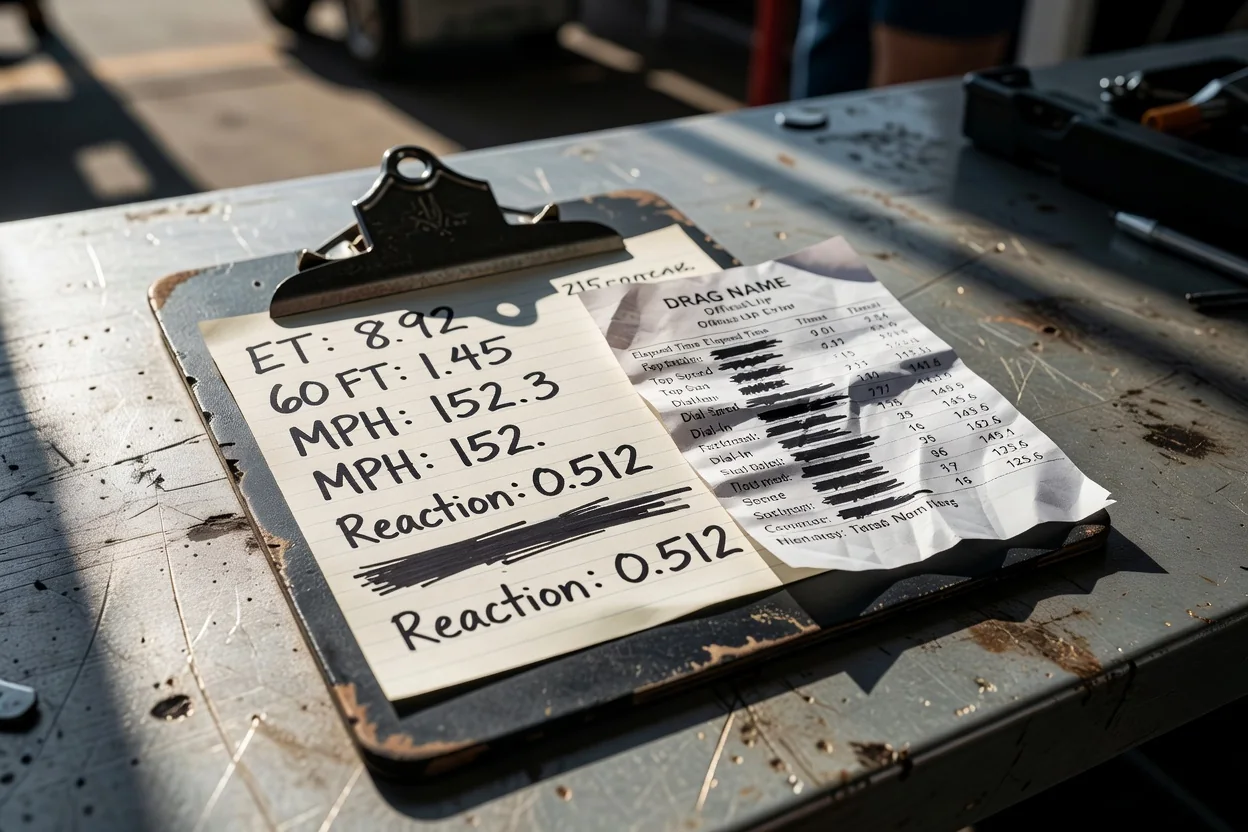
A personal best that broke out is still a loss. The card said so.

The fastest pass the crew ever filmed, the four-wheeler chaos in the pits, and the thousand-mile season from Florida to Cecil County.
The three numbers that decide every drag race, why the launch matters more than the finish, and how bracket racing rewards discipline.
What tech inspection wants, what to bring, what it costs, and the etiquette that keeps you welcome in the staging lanes.
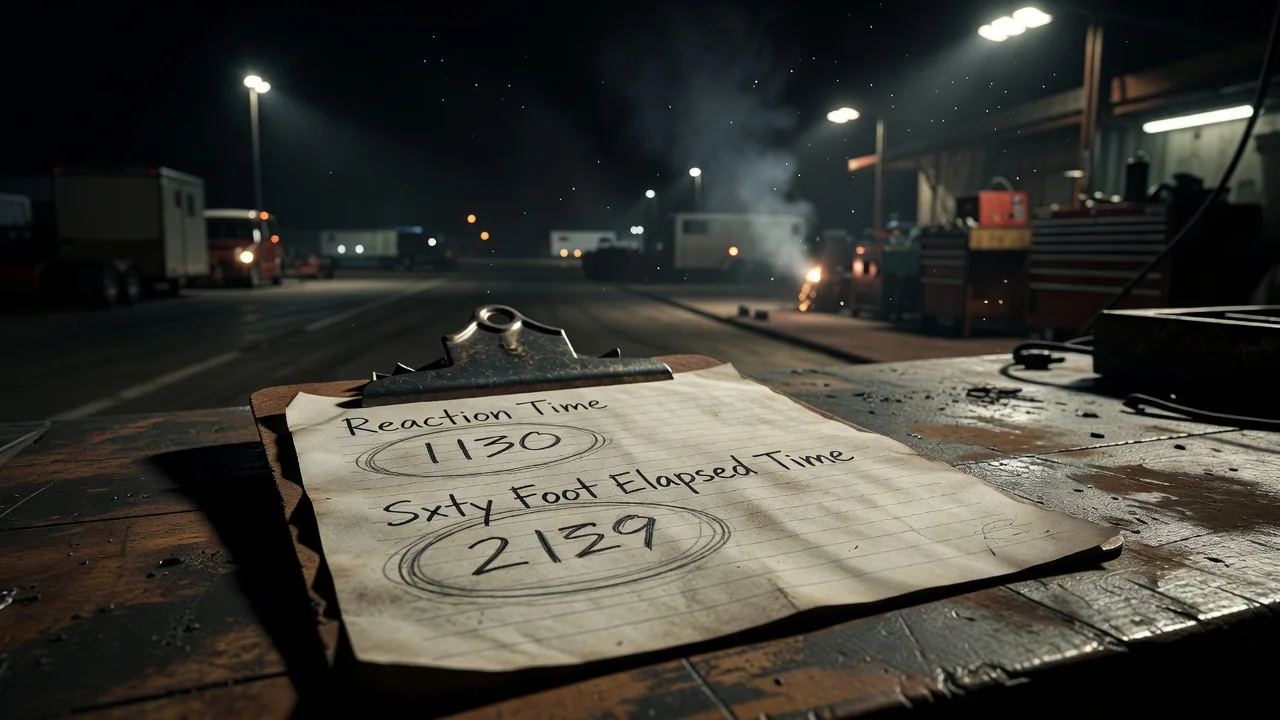
Reaction, sixty-foot, ET and trap: the four numbers that matter, the increments between them, and why one slip is weather but three are data.
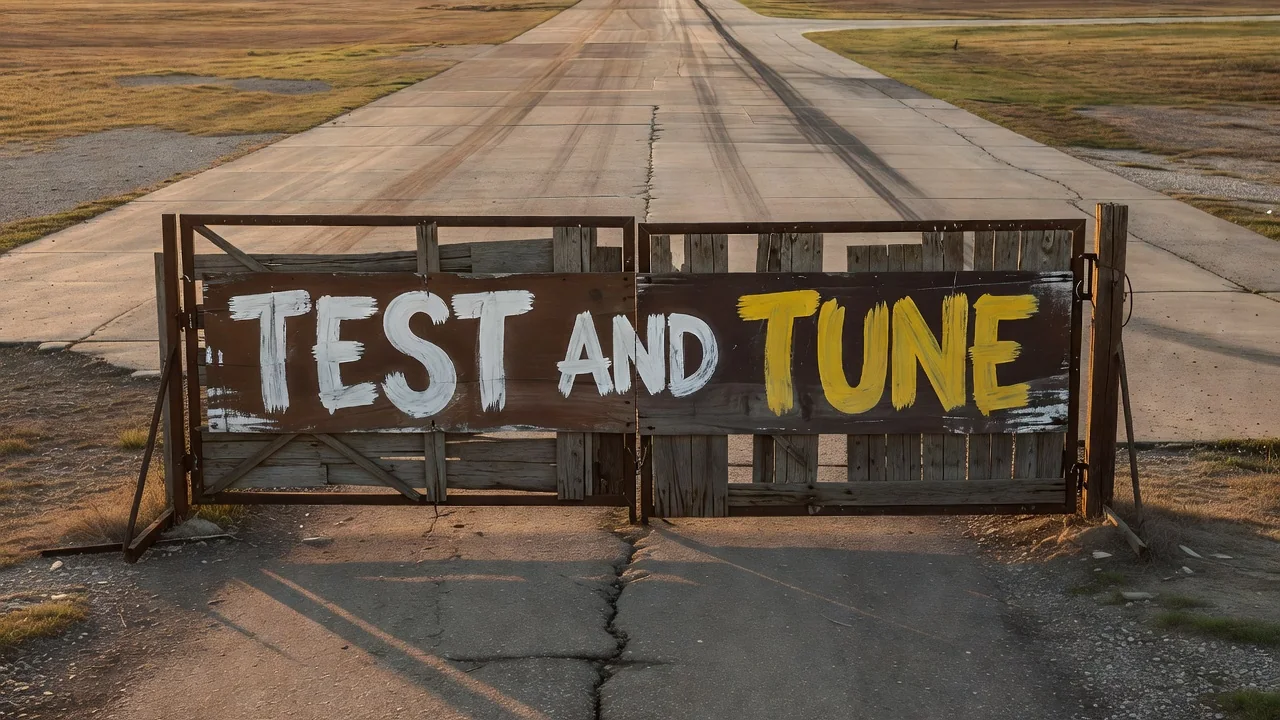
Where the legal racing actually happens, what a test-and-tune is for, which classes take a stock car, and what a first season honestly costs.

From dry lakes and airstrips to the NHRA standard: how 1,320 feet became the distance that settles every argument in American speed.
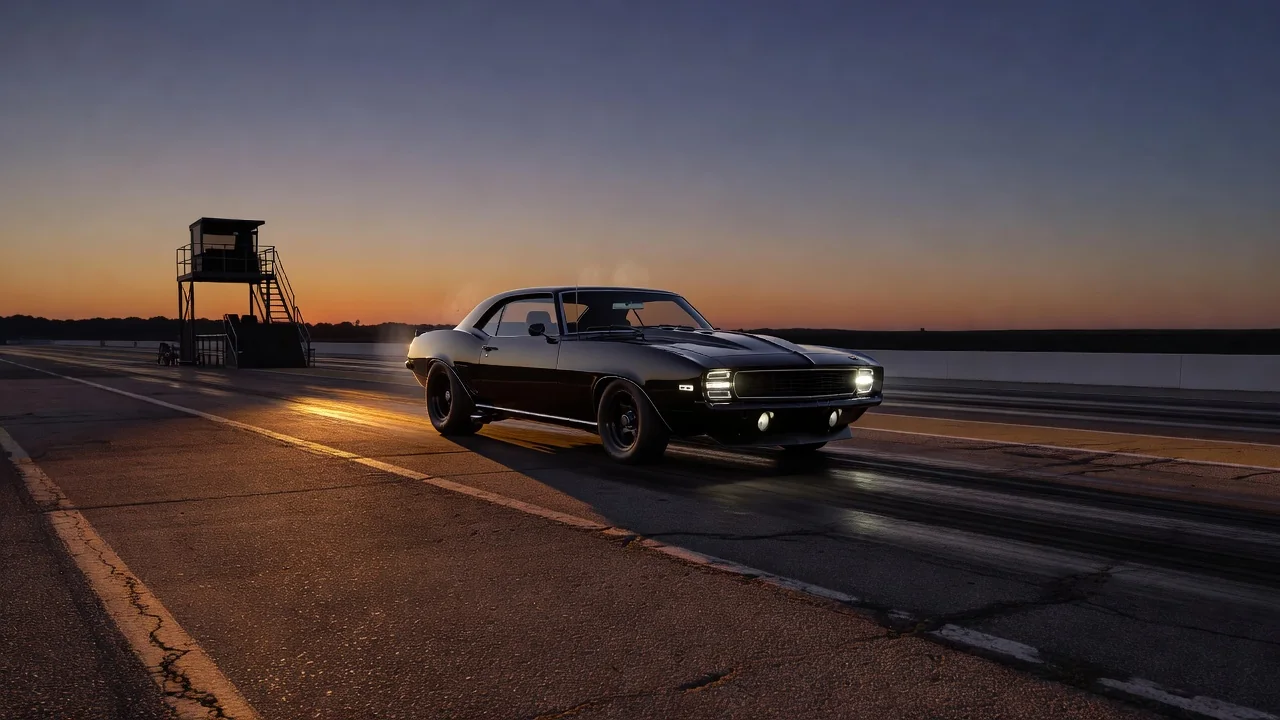
From the gate to the return road: paperwork, tech, the water box, staging and the shutdown — the first run, step by step, without the panic.
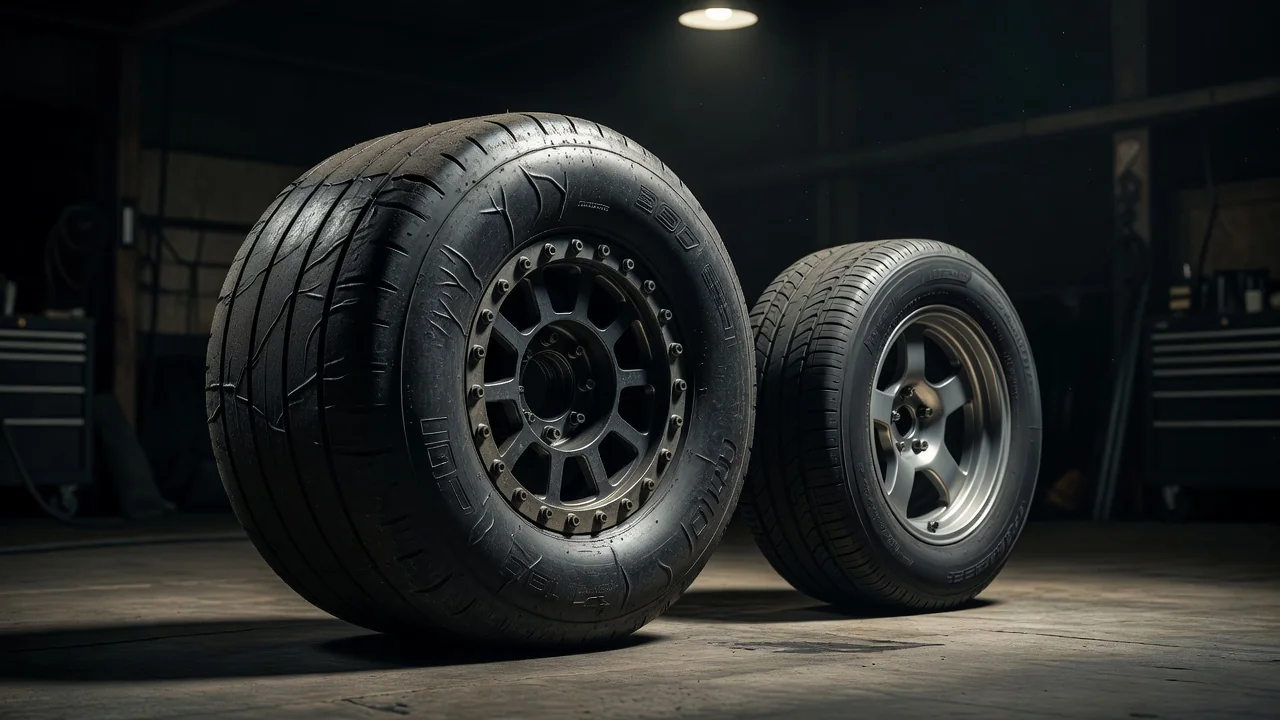
The bias-ply wrinkle-wall, the DOT drag radial and the tire you drove in on: what each gives, what each asks, and the red flags that end tire shopping.
Factory launch control is software, a two-step is a rev limiter with a job, and a transbrake is a question your whole driveline has to answer.

Every rule at the strip is a memorial to a bad day somebody else already had: tech inspection, the speed ladder, and the etiquette that is really safety.