
How to Read a Drag Timeslip: The Receipt, Not the Trophy
A drag timeslip is not a trophy. It is a receipt for one pass: reaction time, sixty-foot, the increments, and elapsed time against the tree you just ran. People search how to read it because the paper looks like a bank statement and the useful story is in three numbers, not in the advertising strip at the bottom. This page is that reading. It is not a crew chief class and not a promise that a better slip makes the car faster tomorrow. It tells you what happened on this pass, in this lane, on this surface.
Reaction time is how long you took to move after the last amber, not how fast the car is. Sixty-foot is how the car left: hook, leave, weight. Elapsed time is the whole trip to the stripe. Trap speed is how hard it was still pulling at the end. Mixing those four is how people brag about a number that actually means they left late in a quick car — or left perfect in a car that went nowhere.
The four numbers that earn a sentence each
Reaction: too quick and you red-light; too lazy and you gifted the other lane a head start. The tree is not your engine. Sixty-foot: if this number is soft, the rest of the slip is a conversation about tires, air and leave, not about the converter you have not bought yet. ET: the official “how long the pass took.” Trap: whether the car was still making speed at the big end. A great trap with a rotten sixty is a car that woke up late. A great sixty with a falling trap is a car that left and then ran out of ideas.
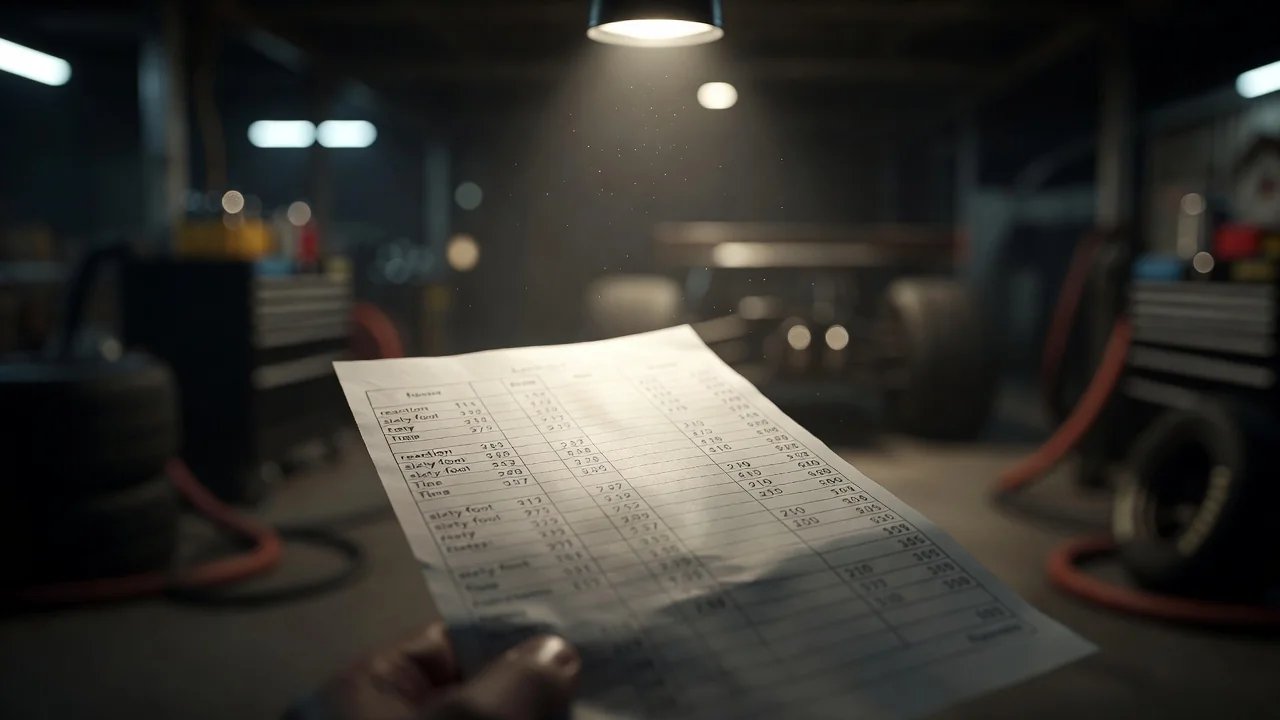
- Read reaction first if you are racing a person. The tree ate more races than the motor.
- Read sixty-foot first if you are racing the car. The leave tells the truth.
- Do not chase trap speed until the sixty is repeatable.
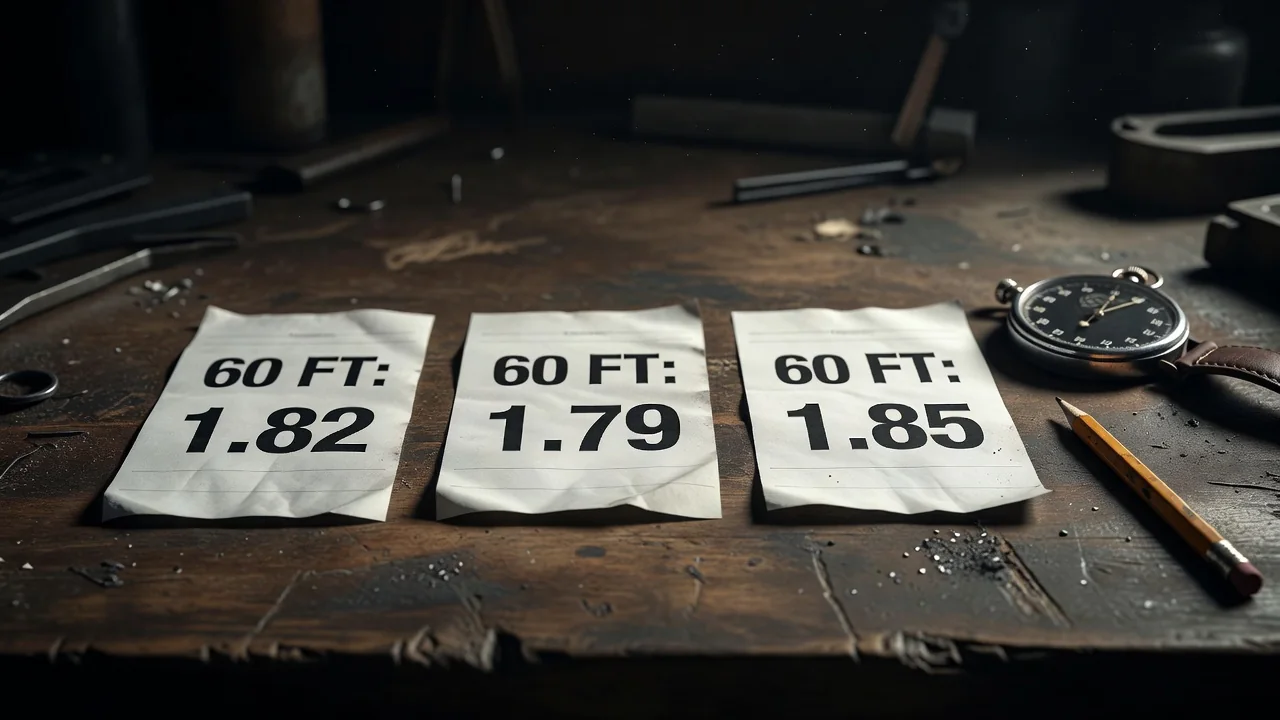
- One slip is weather and luck. Three slips in a row are a pattern.
- Red-light plus a hero ET is still a loss. The slip will say so even if the stands do not.
| Number | What it is | What it is not |
|---|---|---|
| Reaction | You versus the last amber | How fast the car is |
| Sixty-foot | How it left the beam | The whole race |
| ET | Start to finish | A personality |
| Trap | Speed at the stripe | Proof the leave was good |
The increments between the sixty and the stripe
Between the sixty-foot clock and the finish line, the slip prints the middle of the pass: the 330-foot, the eighth-mile and, on a quarter-mile track, the thousand-foot mark, each with its own elapsed time and usually a speed at the eighth. These are the diagnostic numbers. A car that gains on everyone to the 330 and then stops gaining has a top-end problem. A car that is even at the eighth but behind at the sixty gave the race away at the launch. Racers who only read the final ET are throwing away the part of the paper that tells them where the pass was actually won or lost.
Why two slips from the same night disagree
Air is the silent co-driver. A pass made in cool, dry evening air and a pass made in humid afternoon heat are two different cars, and the slip will show it even if the driver changed nothing. Lanes matter too: one lane can hold rubber better, and the regulars will know which. This is why experienced bracket racers log the weather and the lane next to every run, and why corrected “what it would have run at sea level” numbers from phone apps start bar arguments. The honest comparison is same night, same lane, one change at a time.
The risk of framing the slip
A single pretty ET on a cool evening becomes a lie in July. Posting the paper without the reaction is how internet cars get faster than real ones. If you are on a test-and-tune, write the air, the lane and what you changed; otherwise next week you will “fix” the wrong end of the car. The slip is a receipt. Treat it like one. Receipts do not owe you a story.
What to take off the paper before you fold it
Reaction, sixty-foot, ET and trap, in that order if you care about racing someone, or sixty first if you care about the car. One slip is a weather report. Three slips are data. The stands will cheer a red-light hero pass; the paper will not. Keep the paper. It is the only witness that does not drink in the pits.