
Drag Tires Explained: Slicks, Radials and What a Street Car Needs
Ask at any drag strip what makes a car quick and the honest regulars will point at the rear tires before they point at the engine. The sixty-foot clock lives and dies on those two contact patches, and no horsepower number survives a tire that spins, hops or refuses to wrinkle. People search this because the marketing is loud and the staging lanes are quiet: the tire is the cheapest elapsed time you will ever buy, and the most expensive thing to get wrong.
This page sorts the three families a beginner actually meets — the bias-ply slick, the drag radial and the street tire the car drove in on — and what each one asks in return. It is not a size chart and not a brand ranking. It is the conversation the tech line has with your car before you do.
The bias-ply slick: the wrinkle that does the work
The classic slick is a soft, tubeless, bias-ply tire with no tread and a sidewall built to fold. That fold is the point: on the launch the sidewall wrinkles, the contact patch grows, and the tire absorbs the hit instead of passing it to the driveline. Brands like Hoosier and Mickey Thompson built their reputations here. The price of admission is real, though. Slicks are not street legal, they want their own wheels, low air pressure and a burnout to wake them up, and they are unhappy in any water deeper than a damp look.
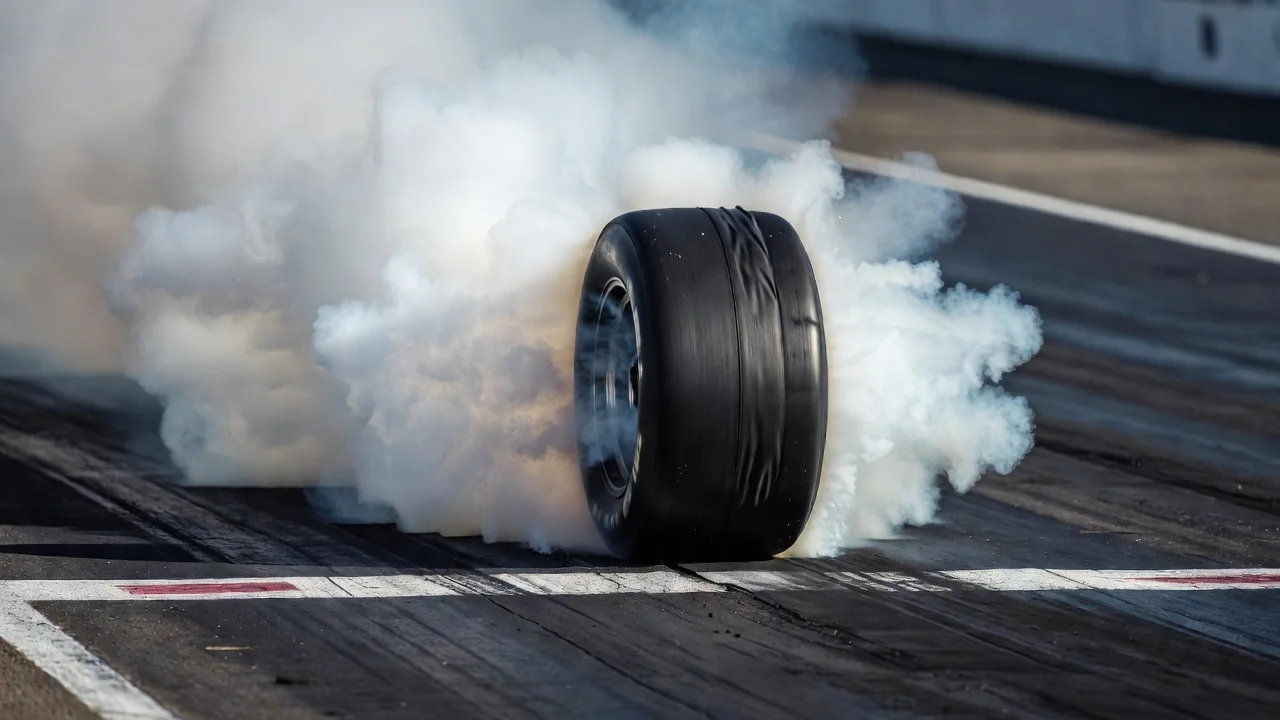
The drag radial: the street-legal compromise that grew teeth
The drag radial exists because street classes wanted slick behavior on a DOT stamp. A tire like the Mickey Thompson ET Street family keeps a thin tread pattern for the rulebook and the ride home, but the compound and construction are aimed at the Christmas tree. Modern radials on a prepped surface can 60-foot with bias-plys while driving to the track on the same set. The trade is tolerance: radials punish sloppy suspension and the wrong burnout more than a wrinkle-wall does, and a radial that spins tends to shake the tire instead of folding politely.
The street tire you already own
A regular high-performance street tire will take you through your first test-and-tune season without shame, and that is the right first answer for most beginners. It drives there, it passes tech, it teaches you the tree and the lanes without adding a variable. Its ceiling is the compound: street rubber is built to survive heat cycles and rain, not to hook, so the sixty-foot will go soft long before the engine runs out of ideas. When the slips stop improving and the only change left is the black stuff under the quarters, that is the tire telling you it is done volunteering.
Pressure, burnout and the prep nobody photographs
Tire choice is half the job; the other half is unglamorous. Air pressure sets how much of the tread meets the track, and a few pounds either way is visible on the slip. The burnout exists to clean the tire and put heat into it, not to entertain the stands, and a street-tired car that does a giant smoky burnout usually just made its tires greasy. Drive around the water box if the car is on street rubber, do a short dry spin to knock the dust off, and let the slicks belong to the cars that brought them.
- Match the tire to the surface you actually race on, not the one in the videos.
- Change one thing per outing: pressure, burnout or tire, never all three.
- Write the pressure on the slip so the next trip starts from data.
- Budget for the wheels and the pressure gauge before the tire itself.
- Respect the water box rules; the car behind you inherits your puddles.
The red flags that end tire shopping early
Some combinations are not worth the argument. Slicks on a car with tired suspension turn a soft sidewall into a pogo stick. Drag radials on an unprepped street surface are an expensive way to spin in circles. Any tire old enough to have forgotten its date code is a hazard at speed no matter how much tread is left. And a beginner does not need the tire the class winner runs; the beginner needs the tire that makes the next twenty passes boring, repeatable and readable on the paper.
| Tire | What it gives you | What it asks back |
|---|---|---|
| Bias-ply slick | The best launch and forgiveness | Second set of wheels, no street use |
| Drag radial | Hook with a DOT stamp | Prep, suspension discipline |
| Street performance tire | Drive-in convenience, easy tech | A soft sixty-foot ceiling |
| Aged tire of any kind | Nothing worth the risk | Everything, eventually |
The strip keeps the score in hundredths and the tire decides where most of them go. Start on what the car wore to the track, learn what the slips are telling you, and let the first real tire purchase be an answer to a question your own data asked. That is how the fast cars in the lanes actually got there.