
Getting Into Drag Racing Legally: The Map of the Way In
Every regular at a drag strip started the same way: standing at the fence with a street car in the parking lot, a question about whether that car was even allowed, and nobody to ask but strangers. The answer, almost everywhere in America, is yes. The legal side of this sport was built to absorb beginners, and it has been doing that job since the tracks first took the argument off the street.
This page is the map of the legal way in: where the racing actually happens, what a test-and-tune night is for, which classes will take a stock car, and what a first season honestly asks of you. It is not a licensing course and not a rulebook. It is the orientation talk the regulars give at the fence, written down.
Where the legal racing actually happens
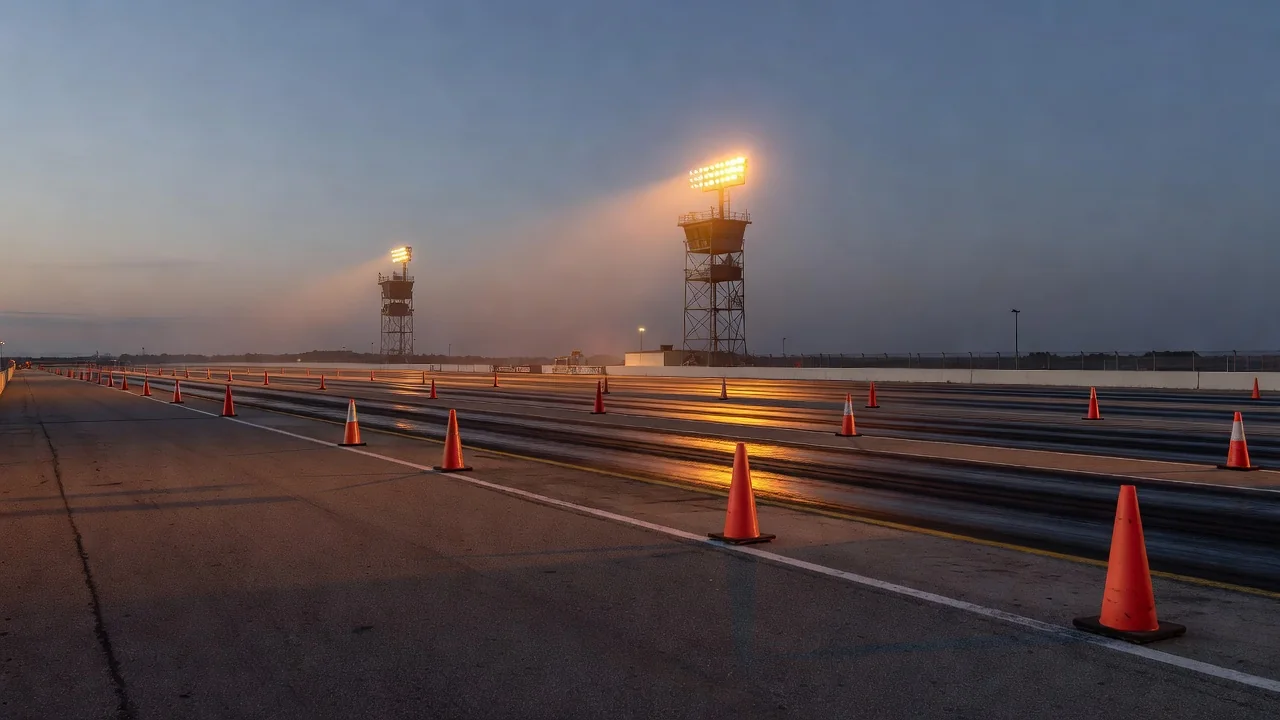
The backbone of the sport is the local drag strip: a quarter-mile or eighth-mile facility with a timing system, a Christmas tree and a weekly schedule that mixes race days with open test sessions. Most strips run under a sanctioning body such as the NHRA or the IHRA, which means a printed rulebook, a tech inspection and insurance behind the whole operation. Alongside them sit the occasional airport and airstrip events, which rent pavement instead of owning it. Each venue sells the same product in the end: a timed lane, an opponent if you want one, and a slip at the far end that does not care about your reputation.
What a test-and-tune night is really for
The test-and-tune is the front door of the sport. The strip sells track time instead of running eliminations, the lane rotation decides who you line up against, and every pass comes back as a printed slip with your reaction, your sixty-foot and your elapsed time. Nobody is eliminated, nobody takes home a trophy, and that is exactly the point: it is the cheapest laboratory in motorsport. A full evening of runs costs less than a tank of race fuel for a serious car, and the mistakes you make there cost pride instead of sheet metal.
This site keeps a complete guide to the format, and the short version is simple: show up, pass tech, make passes, read slips, learn.
Street-legal classes and what they ask of the car
When you are ready to actually race, the entry point is the street class: an eliminator built for registered, muffled, licensed cars that drove to the track under their own power. The demands are modest by racing standards. The car must pass tech, the driver must have a license, and the safety requirements climb only as the car gets quicker. What the class asks of you personally is consistency: bracket racing rewards the driver who repeats a number, not the one who flirts with a personal best and breaks out. A stock sedan with an honest driver beats a nervous hot rod more often than the internet would lead you to believe.
What a first season costs
The honest ledger of a first season is mostly small numbers. Racer entry at a test night runs in the tens of dollars, a helmet becomes a purchase only when the car is quick enough to need one, and the consumables are fuel, tire wear and the occasional part that was already tired before you asked it to race. The expensive line item is time: evenings in the staging lanes, weekends with a wrench, and the patience to change one thing at a time so the slips can teach you something.
A season of Friday nights at the strip still costs less than one drivetrain mistake made on the street, and it leaves you with a notebook full of data instead of a story you cannot tell your insurer.
Why the strip won the argument
The Detroit crew behind this site did not start at the track. They started on the streets around Warren, racing by the airport and telling stories about a railroad hump on Curry Street, and they ended up spending 2003 filming NMCA qualifying from Florida to Maryland. That arc is not a coincidence; it is the natural life cycle of the hobby. The street offers a lane and an opponent. The strip offers the same two things with paramedics at the top end, insurance behind the operation and a printed number that settles the argument. Everything else is nostalgia.
- Ask the track which nights are test-and-tune and which are eliminations before you plan the trip.
- Ask what the tech inspection expects of a stock car, in writing, from the track itself.
- Ask whether your class requires a helmet, and what rating the rulebook names.
- Ask how the lane rotation works so you are not the car everyone waits on.
- Ask where the return road goes before you need it at speed.
| Venue | What happens there | What to ask first |
|---|---|---|
| Local quarter-mile strip | Test nights, brackets, big events | Which nights are open to street cars |
| Eighth-mile track | The same sport on shorter pavement | How the slip reports the shorter distance |
| Test-and-tune night | Open track time, no eliminations | When the lanes open and close |
| Street-class race night | Brackets for licensed street cars | What the class allows and forbids |
| Airstrip event | Rented pavement, roll and dig formats | What format the event runs |
The street gave this hobby its stories, and this site exists because of them. The strip is where the stories keep going. Bring the car as it is, ask the questions at the fence, and let the first slip be the real beginning. Everything after that is just tuning.