
Roll Racing vs Dig Racing: Two Ways to Start the Same Argument
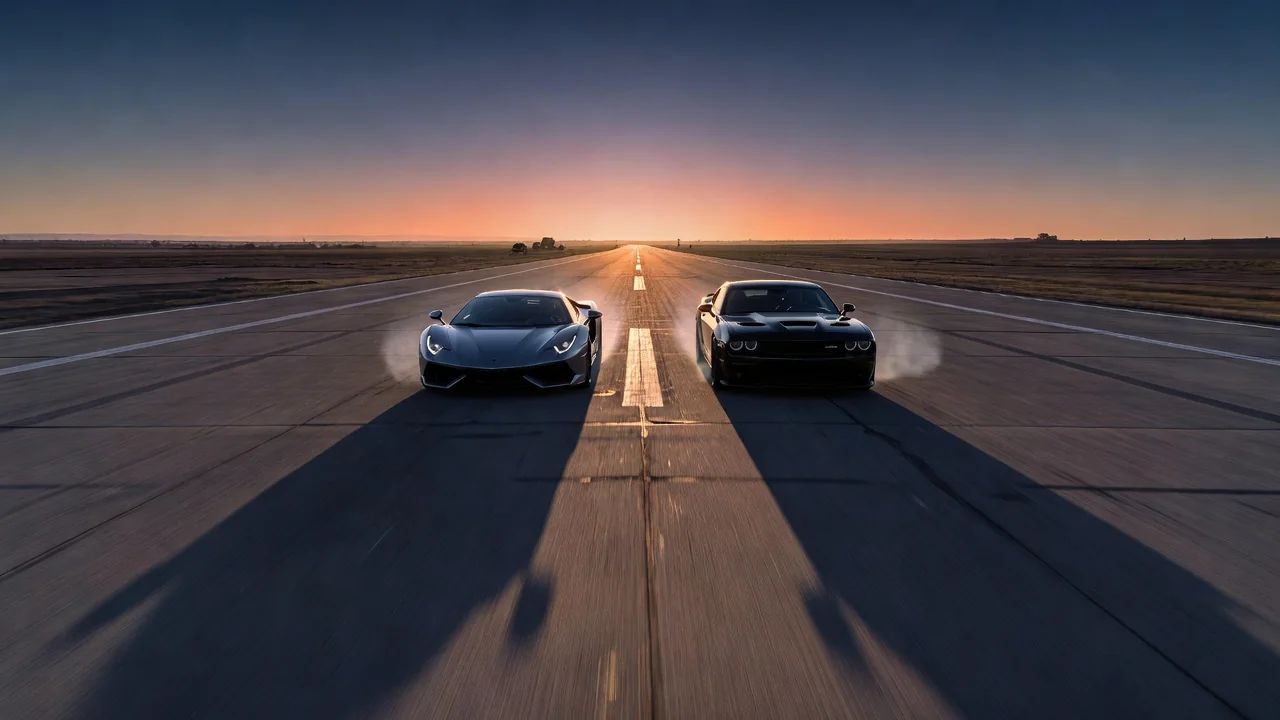
Put two racers at any meet and ask how a race should start, and you will start a third race right there. A dig begins from a dead stop. A roll begins already moving, both cars pacing at an agreed speed until somebody says go. The argument about which one is real racing is older than most of the cars having it, and it has never once been settled.
This is the honest version of both formats: what each start actually tests, why the street loved one and the highway loved the other, and where each belongs now that the grown-up answer to everything is a track.
What a dig actually tests
A dig is the full examination. It tests the launch, which means it tests the tires, the suspension, the converter or the clutch, the surface and the driver's foot all at once. The sixty-foot clock exists because the first chunk of a drag strip decides most of the rest of it. A car that leaves clean can be outmuscled later and still win; a car that spins or bogs is chasing from the first second. The dig is the format the drag strip was literally built for, and every sanctioning body on earth runs it for a reason: it is the hardest version of the question.
What a roll actually tests
A roll deletes the launch from the exam. Both cars pace at speed, and when the signal comes, the test becomes power once moving: boost that builds, gearing that pulls, a motor that stays in its happy place. It flatters big turbo cars and heavy highway monsters, and it punishes anything that needs the launch to look fast. Defenders call it honest because it removes the lottery of traction. Critics call it a half-measure because it removes the hardest skill in the sport along with it. Both are right, which is why the argument survives.
Why the street loved the dig
The street scene this site grew out of was a dig culture, and the reason was theater. Woodward Avenue taught America that a stoplight is a starting line: two cars, one arm drop, a short runway and a verdict in seconds. The dig has a beginning you can see, a middle you can hear and an end you can argue about. It fit the geography of the avenue and the attention span of a crowd standing on a sidewalk. Nobody ever gathered fifty people at midnight to watch two cars pace each other at thirty.
Why the roll took over
The roll rose with the cars themselves. Modern turbocharged street cars make their power with boost that needs time and load, and a hard launch on street tires mostly makes smoke and broken parts. Drivetrains got expensive, and a dig is a drivetrain's worst night. Organized roll-racing followed: airstrip events with a pace speed, a start line and a finish, plus roll classes at actual strips. The format that began as a way to keep gearboxes alive became its own sanctioned scene with its own regulars, its own excuses and its own argument about pace speed.
Where both belong now
The dig lives where it always belonged: at the strip, under a tree, with a prepared surface and a sixty-foot clock keeping everyone honest. The roll belongs at the sanctioned events that run it properly, with a pace car, a defined start and a shutdown area sized for the speeds involved. What neither format belongs on is public pavement, and that is not a moral lecture, just arithmetic: the street gives you no surface, no shutdown, no paramedics and no appeal. Bring the argument to the track and let a slip settle it. Slips are undefeated.
- The dig punishes a lazy reaction and a tire that spins.
- The dig punishes a chassis that was never set up to leave.
- The roll punishes a boost curve that arrives a second late.
- The roll punishes gearing that runs out before the stripe.
- Both punish the driver who lifts, and they punish them in print.
| Format | How it starts | What it rewards | Where it belongs |
|---|---|---|---|
| Dig | Dead stop, tree or arm drop | Launch, traction, reaction | The drag strip |
| Slow roll | Low pace speed to a signal | Traction control and torque | Sanctioned roll events |
| Highway roll | Higher pace speed to a signal | Boost, gearing, top-end pull | Airstrip events |
The argument will never settle, because it was never about the start. It is about which kind of fast you spent your money on. The track answers both versions with a printed number, and the number does not care about your feelings.